Our History
The Puntos Association began operations in 2021. It builds on a 30-year history of work in the Central American region carried out from 1991 to 2022 by the Puntos de Encuentro Foundation, based in Nicaragua.
The Puntos de Encuentro Association is a new organization based on the same founding principles and conceptual framework as the Foundation. Since its inception, the Association has embraced a process of evolution, adaptation, and innovation in new contexts.
View the Foundation’s most notable programs from 1991 to 2022.
Starting Points

Transforming Unequal Power Relations
To achieve the society we want, aspirations alone are not enough. The unequal power relations that perpetuate authoritarianism, violence, discrimination, and exclusion do not change on their own.
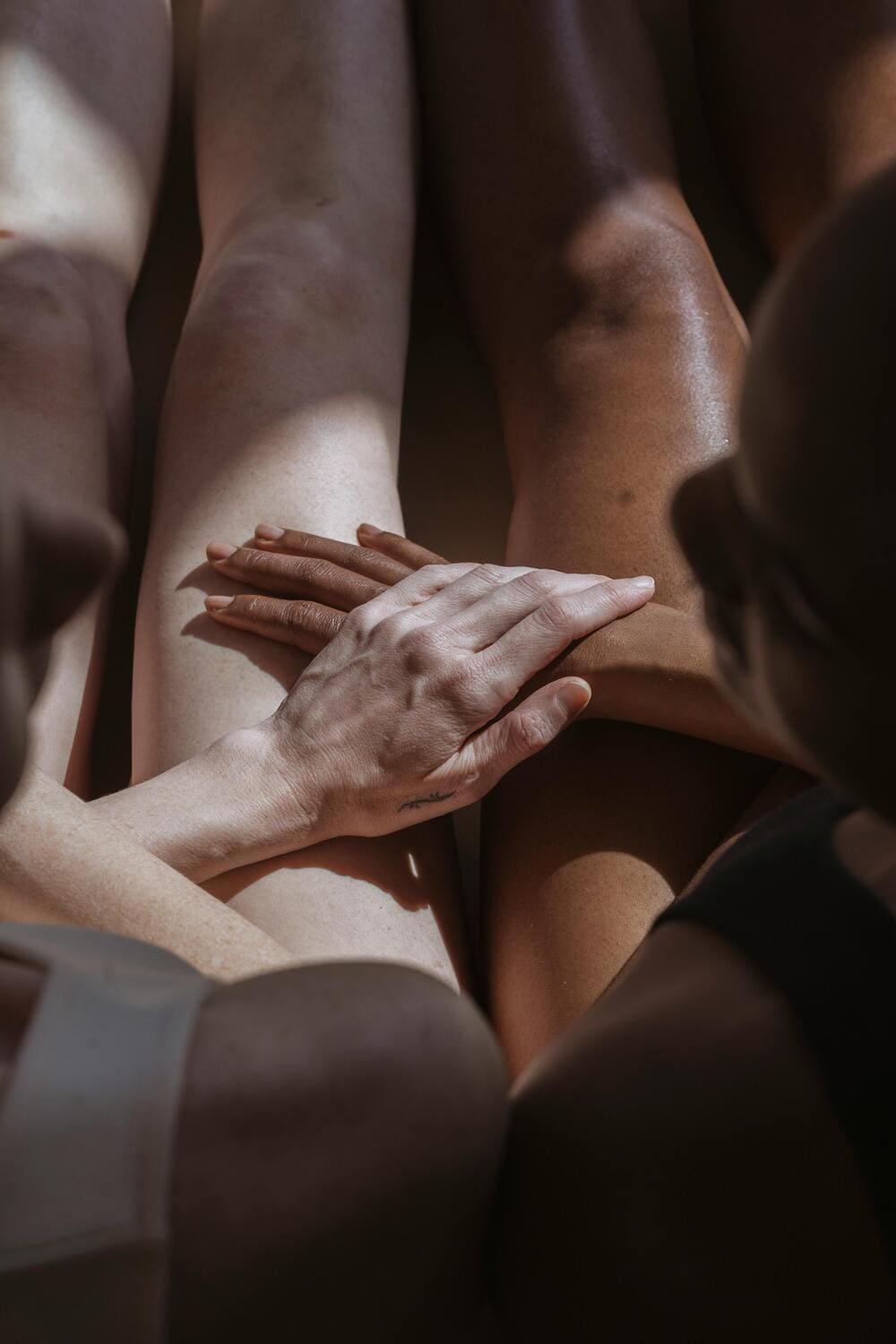
At home, in bed, and on the street
To advance democratic values and practices, as well as equity and mutual respect at home, in the bedroom, and on the street, changes are needed in various spheres and at various levels: in social norms and popular culture, as well as in interpersonal and family relationships, in the community and institutions, in policies, and in political culture.

Change starts with people
We focus our work primarily on people who are driving these changes: activists and leaders working in their communities, in organizations, institutions, and the media, as well as in social movements fighting for the rights of women of all ages, LGBTIQ+ people, and the Central American migrant community.
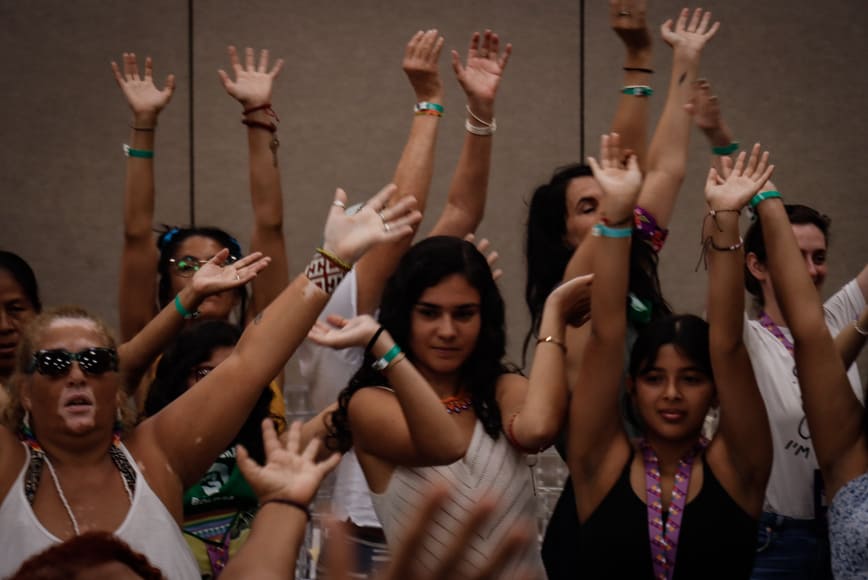
Collective action is key
While people are the driving force behind these changes, they cannot be achieved through individual effort alone. Collective and community action is needed, as well as groups and organizations that come together in social movements to demand and bring about the desired changes.
Puntos’ Social Contribution
What We Do and How We Do It
Together with activists and leaders, as well as the organizations and movements with which we work at the local and regional levels, we combine four types of interrelated and complementary processes, which are:
- Training and capacity building.
- Communication for Social Change.
- Partnerships and collaborations.
- Research, learning, innovation.
In each one, we address the topics, content, approaches, and practices mentioned above from different perspectives.
Our work takes place both in person and online. Our in-person work is carried out in Nicaragua, Guatemala, El Salvador, Honduras, and Costa Rica, with participants from these countries as well as migrants from various other countries. Our online work extends beyond the Central American region.

Our training and capacity-building programs focus on topics, methodologies, and approaches that are relevant to strengthening organizations and social movements.
We want participants—as activists and leaders—to develop their individual and collective potential and capacities to transform their own lives, the groups, organizations, and movements in which they participate, and the other environments in which they operate. Through these processes, participants develop proposals, plans, and agendas aimed at achieving the changes and goals they have set for themselves.
In both in-person and virtual programs, we combine experiential learning, theory, and individual and group exercises, always promoting exchange and dialogue among participants. Almost all of these programs also include components on communication for social change, partnerships and coordination, and learning that complement and reinforce the training and capacity-building work.
We view public opinion as crucial to social change. The media are vital, but communication goes beyond the media. It is a process of dialogue and the coming together of diverse ideas, imaginations, realities, and voices—one that can connect people across distances, build community, and foster a sense of belonging to social movements, going beyond individual reading, listening, and viewing.
In the current context of extreme political polarization, at Puntos we use different communication formats to build bridges and provide information and narratives that support people in their personal and social lives, as well as in their lives as activists. All of this contributes to the environments conducive to social change that we are seeking.
We are aware that terms such as “human rights,” “citizenship,” and “gender perspective” can sound technical and may prevent people—including activists—from embracing them and recognizing their relevance in everyday life. That is why, in our communication materials, we seek to define and “translate” complex ideas and analyses into simple, direct language to help people form and express their perspectives on issues that affect their lives.
We produce our own media content to reach the various groups we work with. We also promote training and networking initiatives for young and feminist communicators at the regional level to achieve greater coverage from a perspective of equity and rights.
Collective action is a key pillar of social change and of achieving justice and equity in our societies; it is crucial to join forces in social movements. That is why, in all our work, we promote alliances, coordination, a sense of belonging, and collective action.
Reaching a consensus among diverse groups is always a challenge; collaboration begins by building bridges and fostering dialogue and exchange to learn about each other’s experiences, perspectives, and aspirations. This allows us to reach a sufficient level of understanding to develop agendas of common interest and take collective action at the local, national, regional, and international levels, while always respecting the autonomy of each organization.
Our countries have been plagued by authoritarian and exclusionary structures for hundreds of years, a reality that, unfortunately, is also reflected in feminist and progressive organizations. That is why we promote democratic forms of organization, prioritizing respectful interpersonal and organizational dynamics, mutual respect, non-discrimination, and the freedom to express diverse and differing ideas and opinions.
Partnerships and collaborations go hand in hand with education and training efforts that seek to strengthen activism and leadership through values and behaviors that promote inclusion, equity, and respect for the autonomy of individuals, groups, and organizations.
At the same time, we promote dialogue between generations and among people with different identities and from diverse social backgrounds, with the aim of building alliances and partnerships among different types of groups and communities.

We see ourselves as an organization that is constantly learning to ensure continuous improvement in the quality and impact of our work.
We continuously stay up to date on the state of the art in the topics and approaches we are working on. We participate in forums for debate and discussion, where we share experiences and evidence drawn from our practice.
Before, during, and after our initiatives, we engage with the people we work with to ensure that the design of projects, products, and other initiatives is aligned with the needs and interests of the groups we work with.
In addition to understanding the impact and effectiveness of our work, we are interested in understanding what works, what doesn’t work, and why. That is why we are interested in both quantitative and qualitative aspects, as well as the effectiveness and impact of the methodologies we use. We want to understand how change occurs and the relationship between individual change and collective and social change.
Resources

DKY is a digital media outlet that offers educational and entertaining content, showcasing stories and realities from Central America for urban youth aged 18 to 35. Through its audiovisual content, it invites viewers to reflect on relevant issues in the region, such as sexual rights, sexual diversity, migration, and gender-based violence, among others.

A Central American digital magazine that fosters communication and exchange among activists from women’s, feminist, and LGBTIQ+ organizations and movements in the region, featuring articles and stories that reflect and support their struggles.

This mobile app was developed in response to needs identified during training sessions with migrants. It benefits hundreds of human rights defenders and activists who, for various reasons, had to emigrate to other countries, including Costa Rica, Spain, Guatemala, the United States, Mexico, and Panama.
The training program “My School, a Safe Place,” aimed at preventing sexual violence and suicide in schools, includes training for teachers and students on how to use the power of the spoken word—through stories, narratives, fiction, and role-playing—to share experiences, facilitate learning, and encourage reflection as tools for empowerment.
Testimonials